Sculptural and performance project initially commissioned for Dislocations group exhibition, Hunterian Art Gallery, Glasgow, 2021.



Extract from exhibition catalogue
Dominic Paterson, curator, Dislocations:
For Dislocations Minty Donald and Nicolas Millar were commissioned to make new work for the Hunterian Art Gallery and its sculpture courtyard. Appropriately, given the gallery’s concrete construction and its location in an area of Glasgow that was itself mined for natural resources, they chose to develop work about the extraction of materials such as aggregate, sand, peat and coal. The sites from which these materials are taken index the world they are used to construct, as Lucy Lippard notes when she claims ‘gravel pits as a metaphor for the underground level of a twenty-first-century cultural landscape’. These sites bring about a collapse of space and time: in Lippard’s view ‘gravel pits transform the incomprehensibly distant geological past into dubious futures.’ Such intersections of deep time with human action are an ongoing preoccupation of Donald and Millar. In the following text they set out how they handled them in this particular instance.
‘When nature appears before us solely as natural resource, other kinds of relation and value — ecological (including human flourishing within ecosystems), spiritual, cultural and aesthetic — are disregarded’. Imre Szeman and Jennifer Wenzel, 2020.
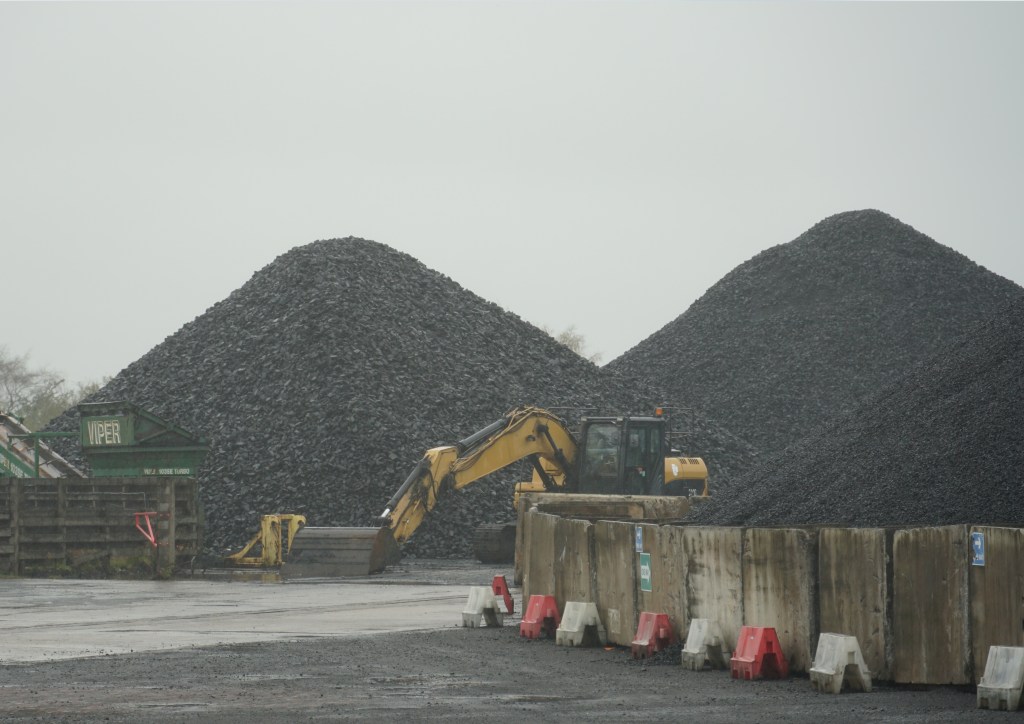
Scotland’s landscape is shaped and continues to be transformed by extractive industries and their legacy. In making With These Hands we encountered some striking examples: an expanding honeycomb of tunnels under a hill on the Morvern peninsula in northwest Scotland; quartz sand mineworks that are largely hidden from sight but heard and felt by locals when blasting is underway; a mountain in Argyll flattened and hollowed by granite extraction at Glensanda super-quarry; and Ayrshire countryside ‘re-profiled’ according to regional authority specifications following the closure of the last open-cast coal mine in Scotland.
On a global scale, extractivism is a dominant mode of human interaction with nonhuman matter. Extractivism is defined as a practice where materials are taken from one geographical location for use in other, generally more affluent, regions, frequently using intensely mechanised and highly exploitative means. In extractivism, ‘the act of resource extraction become[s] a policy, an ideology, a logic’ (Szeman and Wenzel, 2020). Extractivism is inextricable from global wealth and power inequalities, legacies of colonialism and imperialism.
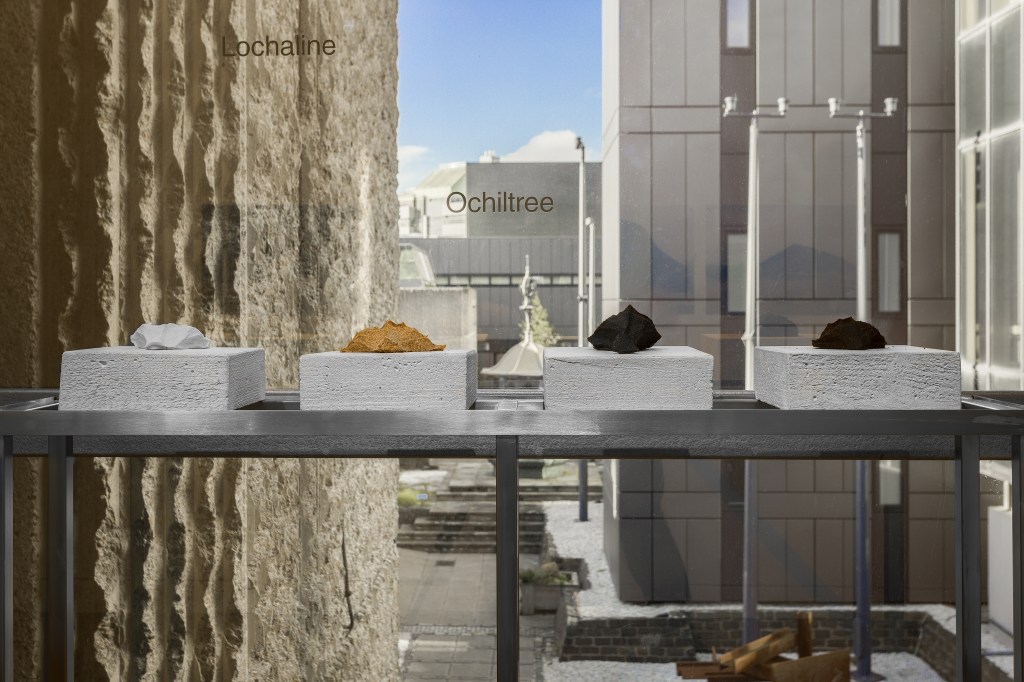
With These Hands reframes industrial and global processes of extraction and extractivism as practices carried out at the scale of a single human, taking the hand as a unit of measurement and as a conduit between human and other-than-human matter. We imagine early humans scooping water, or earth, or sand in their cupped hands, perhaps to drink, or perhaps simply for the sensation of touching and holding these materials; perhaps to transport them elsewhere for more pragmatic purposes, or store them for future use. We reflect on the evolution and escalation of humans’ interactions with ‘natural resources’. We think about the individuals who work in extractive industries today; how they feel about the materials they displace and whether they regularly touch or hold them. We wonder, ‘how much is enough?’ In With These Hands we try to evoke the personal, sensuous, aesthetic and cultural dimensions of our interactions with the nonhuman stuff that sustains our lives, dimensions perhaps lost, overlooked or excluded in industrialised extraction and extractivism.
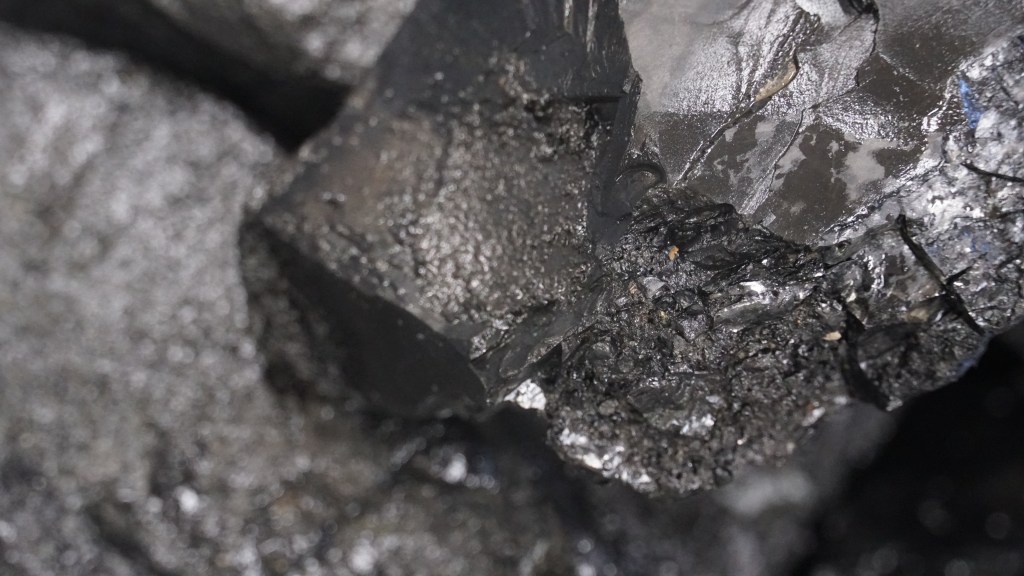
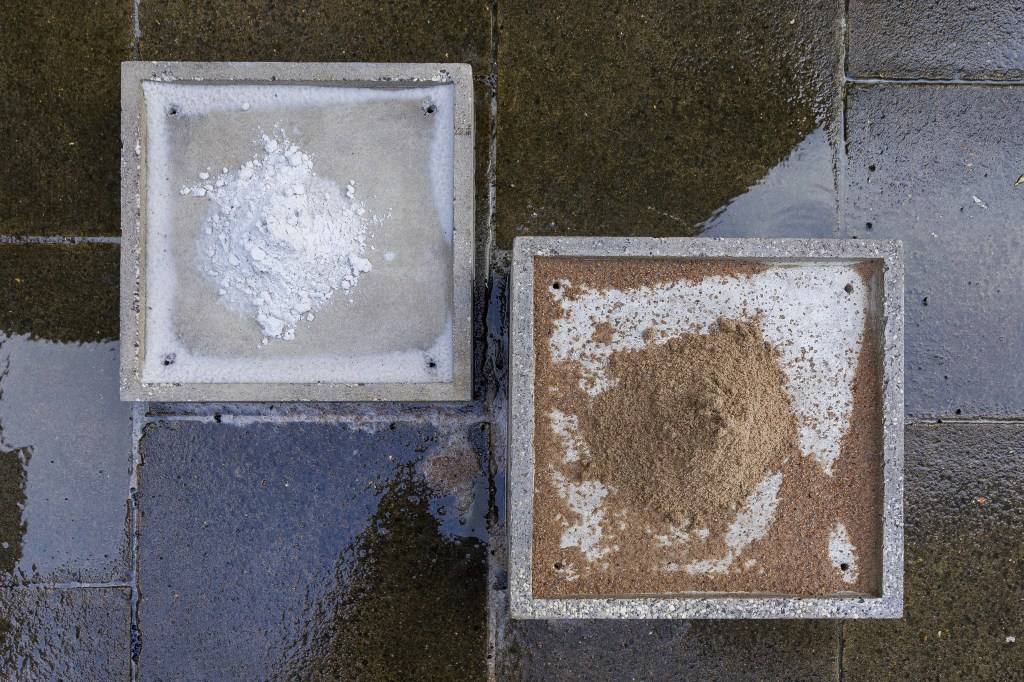
With These Hands marks the start of a body of work that considers extractive processes as sculptural and aesthetic practices. This first phase focusses on four materials extracted in Scotland today or in the recent past: coal, peat, sand, and stone. The work was made with participation from organisations responsible for the extraction of these resources: Hargreaves Services Plc., Northern Peat and Moss, Lochaline Quartz Sand Ltd., and Yeoman Glensanda Aggregate Industries. At each extraction site we visited, we met an employee who allowed us to make a cast of the inside of their cupped hands and who spoke to us about their work and relationship with the material they extract. Each organisation donated a small quantity of extracted material. With These Hands is presented as work-in-process.
 donaldmillar